How to Sell Live Online: The Complete Live Selling Guide for Beginners
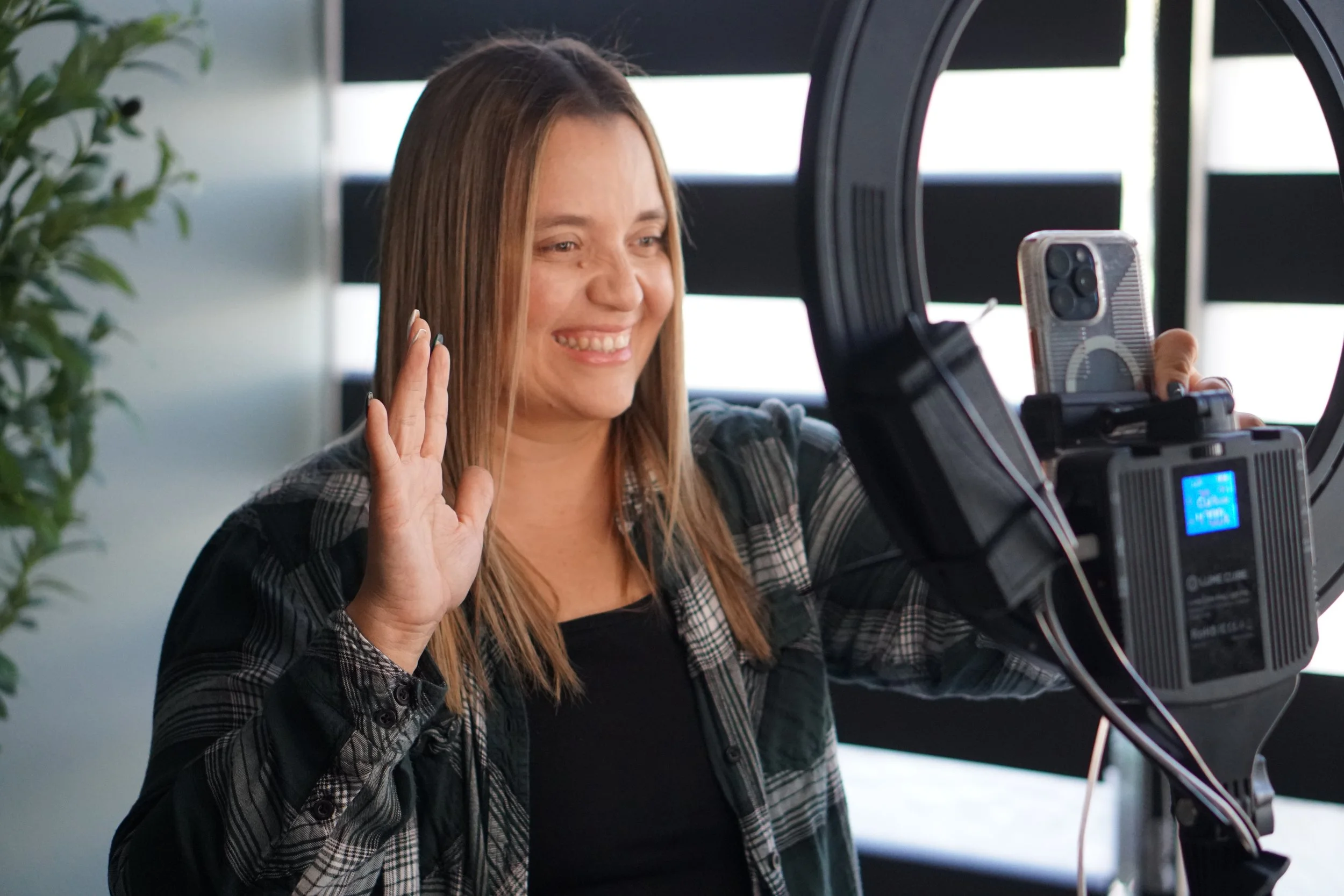
Use this step-by-step show flow to sell live on Whatnot, TikTok Shop, TikTok Auctions, Amazon Live, or wherever you sell live.
The first time I tried to sell live, I did not feel confident. I felt sick.
English is not my first language. I was raising four children, struggling with postpartum depression, and carrying the weight of $60,000 in debt.
As soon as I saw myself on camera, every fear in my head became louder:
What if nobody watches? What if I say the wrong thing? What if people laugh at my English? What if I don’t sell anything?
During my first Whatnot show, the viewer count dropped from around 40 people to 30, then 20, then 10, then five, and finally three.
One of those three people was my mom.
I froze, cried, and ended the show early.
I could have decided live selling was not for me. Instead, I remembered a 30-day live challenge I had attempted years earlier and made myself a promise: I would go live every day for 30 days, even if the shows were awkward, quiet, or messy.
That decision changed my life.
It didn’t happen because I suddenly became fearless. It happened because I learned how to follow a repeatable live-selling show flow until confidence became a result of showing up.
Today, Moms & Crumbs has grown into a multi-seven-figure reselling business. We have shipped more than 400,000 orders, earned more than 70,000 five-star reviews, and built audiences through live selling on Whatnot and TikTok.
I’m sharing this guide because I know the seller staring at the Go Live button doesn’t need another motivational quote.
She needs to know what to do next.
How Do You Sell Live Online? The Short Answer
To sell live successfully:
Choose one clear show theme.
Welcome viewers before pitching products.
Preview what is coming.
Tell a story around each product.
Share the important product details.
Reset the room as new people arrive.
End with a clear next step.
You don’t need a perfect live-selling script. You need a repeatable flow that helps you keep moving.
Want the Printable Live-Selling Guide Beside You?
Download my complete Live Selling Show Flow Guide for fill-in-the-blank scripts, planning worksheets, engagement prompts, and a post-show review.
[BUTTON: DOWNLOAD THE FREE LIVE SELLING SHOW FLOW GUIDE]
Button link: /live-selling-show-flow-guide
What Is Live Selling?
Live selling is the process of presenting and selling products through a real-time video broadcast. Viewers can watch demonstrations, ask questions, interact with the seller, and purchase products while the show is happening.
You may hear it called:
Live shopping
Livestream selling
Social selling
Live commerce
Live auction selling
The platform can change—Whatnot, TikTok Shop, Amazon Live, or another live-shopping platform—but the heart of the experience remains the same:
A real person is helping another real person make a confident buying decision.
That human connection is what makes live selling different from uploading a product photo and waiting.
Customers aren’t only looking at an item. They’re watching how you use it, hearing why you chose it, and deciding whether they trust you.
People may enter your live show for the product, but they stay for the person.
Why Most Beginners Freeze on Camera
Most new live sellers believe confidence must come before the first show.
That belief keeps them waiting.
They wait for better lighting, more inventory, a bigger following, a perfect background, or the day they finally know exactly what to say.
But confidence is not an admission requirement for live selling.
Confidence is what you build by surviving the awkward shows and discovering that you can keep going.
A word-for-word script can sometimes make the fear worse. The moment you forget one sentence, you feel lost.
What works better is a show flow: a simple sequence that tells you the purpose of each part of the live without forcing you to memorize someone else’s personality.
That’s why I created the C.R.U.M.B.S. Live Show Flow.
The C.R.U.M.B.S. Live-Selling Show Flow
Every strong live-selling show needs six basic moves:
C — Connect immediately
R — Reveal what is coming
U — Unpack the product story
M — Make the value clear
B — Build momentum
S — Send people to the next step
You can use this structure with one viewer or one thousand.
You can use it to sell clothing, beauty products, home goods, collectibles, reseller bundles, or products you created yourself.
The words will change, but the rhythm stays the same.
Before You Go Live: Decide These Five Things
A successful live show begins before the camera turns on.
You don’t need to outline every sentence, but you should know what you’re walking into.
1. Choose the Star of the Show
Every show needs one clear focus.
It could be one brand, one category, one type of product, or one problem you’re helping the buyer solve.
A show called “Random Stuff From My Warehouse” makes viewers work too hard to understand why they should stay.
A show built around one of these themes immediately gives the audience a reason to care:
Plus-Size Fall Layers
Designer Bags Under $100
Host a Beautiful Brunch
Back-to-School Clothing Deals
Self-Care Essentials
Reseller Bundles for Beginners
For your first live-selling shows, start with products you know and genuinely enjoy.
Familiarity makes it easier to answer questions and talk naturally.
2. Find the Story Connecting the Products
People don’t only buy objects. They buy moments, solutions, and identities.
Ask yourself:
Where would someone use these items?
When would they need them?
How do the products fit together?
What experience do they help create?
What problem do they solve?
Your connecting story might involve hosting friends, going back to school, preparing for a vacation, enjoying a self-care night, entering a new season, or simply making everyday life easier.
3. Set One Main Goal
Not every show needs the same definition of success.
Your goal might be:
Making your first 10 sales
Introducing a new category
Moving older inventory
Attracting followers
Testing a new show time
Practicing on camera
Building relationships with potential buyers
When your goal is clear, you can review the show honestly instead of deciding it failed because it didn’t accomplish everything at once.
4. Plan Your Momentum Moments
Decide how you’ll re-engage the room before the show begins.
Depending on the tools and rules of your platform, this could include:
A poll
A question
A featured product
A deal drop
A bundle
A countdown
A product demonstration
A giveaway
Giveaways are optional. They should support your show, not become the only reason people stay.
Always consider your profit margins and follow the current promotion rules of the platform you’re using.
5. Know How You’ll Close
A clear ending keeps you from awkwardly disappearing when you’re tired.
Know what you want viewers to do before they leave.
You might ask them to:
Purchase the final item
Follow your account
Bookmark your next show
Join your community
Download a resource
Listen to your podcast
Share your live with a friend
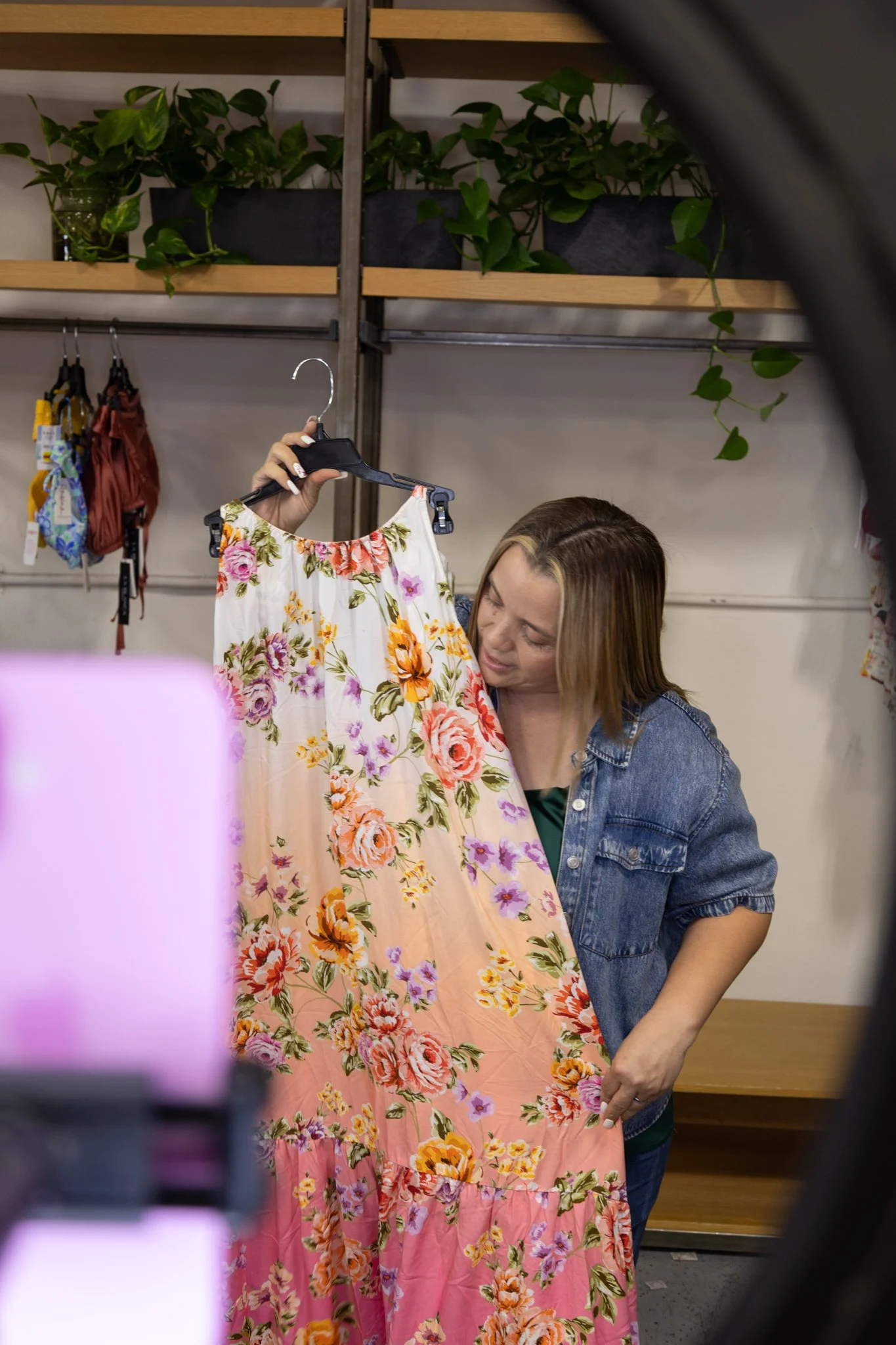
Your Simple Pre-Live Checklist
Before you hit Go Live:
Charge your phone.
Silence unnecessary notifications.
Confirm your internet connection.
Check your camera angle, sound, and lighting.
Place your light in front of you instead of behind you.
Sort your products in the order you plan to show them.
Confirm inventory quantities and prices.
Review important product details.
Check your shipping settings.
Prepare your packaging supplies.
Write your opening question on a note card.
Prepare a mid-show reset.
Write down your closing call to action.
Get some water ready ;)
Review your platform’s current rules, especially for promotions, giveaways, and product claims.
Bonus: If you can run a giveaway, do it! It can help boost your algorithm and build community
C — Connect Immediately
The first few minutes aren’t about pushing products. They’re about opening the room.
Give notifications time to reach people. Give viewers time to enter. Give yourself time to settle into your voice.
Greet people, introduce yourself, and ask a question that is easy to answer.
Live-Selling Opening Script
Hey, friends! Welcome in. If we haven’t met, I’m [NAME], and today we’re selling [WHAT YOU’RE SELLING]. While everyone is joining, tell me [EASY QUESTION]. I’ll start by showing you [OPENING ITEM], and later I have [SPECIAL MOMENT]. If you’re catching the replay, say hello too. I’m so glad you’re here!
The goal isn’t to sound like a television host.
The goal is to make one person feel like she walked into a store where the owner is genuinely happy to see her.
What If Nobody Is Watching Yet?
Keep talking.
I know how uncomfortable that sounds because I’ve lived it.
In the beginning, the viewer count controlled my emotions. If the number went up, my energy went up. If people left, I felt rejected.
Eventually, I placed a happy-face sticker over the viewer count because I needed to stop performing for a number.
I decided I would give one person the same attention I would give 100 people.
When the room is quiet, you are still:
Practicing your on-camera personality
Creating content for the replay
Learning how your platform works
Giving the next person who enters something worth hearing
Ask a question and then answer it yourself.
Talk about why you chose the products, how you would use them, what you learned while sourcing them, or what you’re excited to show later.
Replays matter—and practice matters even more.
R — Reveal What Is Coming
People are more likely to stay when they understand what’s happening.
Once you’ve welcomed the room, give viewers a simple preview.
Tell them:
What brands or categories you’re showing
What price range they can expect
Whether there is a special offer
Why you selected these products
What exciting item is coming later
You aren’t pitching yet. You’re orienting them.
Live-Show Preview Script
Today we’re doing [SHOW THEME]. I chose these products because [WHY]. You’re going to see [CATEGORIES OR BRANDS], and later I’m showing [TEASER].
A clear preview makes the room feel organized—even if your garage, warehouse, or living room looks like real life behind the camera.
U — Unpack the Product Story
One of the most important live-selling tips I can give you is this:
Don’t only list product facts. Help people see the product in their lives.
Use this four-part product story formula:
Ask a question. Pull the viewer into the conversation. Ask, “Have you ever used something like this?” or “Where would you wear this?”
Paint the picture. Show how you would use, style, gift, display, or pair the product.
Explain why it’s good. Translate the feature into a real-life benefit.
Invite the next step. Make the purchase clear without pressuring the viewer.
Live-Selling Product Story Script
Have you ever [QUESTION]? Let me show you how I would use this. This is [PRODUCT AND IMPORTANT DETAILS]. What I love is [FEATURE] because it helps you [BENEFIT]. If this fits your life, go ahead and grab it. If not, stay and see what’s next.
The Cheeseboard Story: Sell the Moment, Not Only the Object
My daughter once ran a live with only about 30 to 40 people watching.
She was selling cheeseboards, but she didn’t stand there repeating the word “cheeseboard.”
She talked about hosting friends, Pinterest inspiration, cheese combinations, and creating a beautiful moment at home. She asked questions, showed pictures, and helped people imagine using the product.
That night, she sold around 250 items in two hours. More than 100 of them were cheeseboards.
People didn’t know they wanted the item until she showed them the experience it could create.
The same principle works with clothing, beauty products, home goods, collectibles, and almost anything else you can sell live.
M — Make the Value Clear
Story creates desire, but accurate details create trust.
Every product presentation should include the information a buyer needs to make a confident decision:
Product name
Brand name
Size, quantity, or variation
Material or important ingredients
Condition
Wear or visible defects
Measurements when they matter
What is included
What is not included
Important use, care, or safety information
Clear descriptions help protect your customer, reduce confusion, and prevent avoidable problems after the sale.
Never hide a flaw because you’re afraid it will stop the purchase.
Trust is more valuable than one transaction.
Turn Product Features Into Benefits
A feature tells the customer what something has. A benefit explains why it matters.
“This bag has three compartments” is a feature.
“You can separate your phone, keys, and everyday essentials instead of digging through one large pocket” is the benefit.
“This sweater has an oversized fit” is a feature.
“It layers easily and gives you a relaxed look without feeling tight” is the benefit.
Don’t invent benefits or make claims you can’t support.
Tell the truth, make the value clear, and let the customer decide.
B — Build Momentum Throughout Your Show
A live audience is always changing.
New people enter after the opening. Other people get distracted, leave, and return.
That means you can’t explain your show once and assume everyone heard you.
Every so often, reset the room:
Welcome the people who just joined.
Remind them who you are.
Explain what the show is about.
Recap one highlight they missed.
Tease what is coming next.
Ask a simple question or poll.
Feature the current product using the tools available on your platform.
Mid-Show Reset Script
If you’re just joining, welcome! I’m [NAME], and today we’re doing [THEME]. So far, we’ve seen [HIGHLIGHT], and coming up next I have [TEASER]. Tell me in the chat: [QUESTION].
Repeating important information isn’t annoying.
It’s hospitality for the person who just walked into the room.
Do You Need Giveaways to Succeed at Live Selling?
No.
Giveaways can create attention and momentum, but they aren’t a substitute for product-market fit, trust, or a good show.
If you use giveaways, plan them intentionally and make sure the cost fits your business.
You can also create momentum with:
A strong product reveal
A limited bundle
A product demonstration
A this-or-that poll
A countdown
A customer story
A special item coming later
Always use the features currently supported by your platform and follow its rules.
S — Send People to the Next Step
Closing a sale doesn’t have to feel aggressive.
When people feel informed and connected, the close can be a simple invitation.
Try phrases like:
“If this is something you would actually use, go ahead and grab it.”
“If this one isn’t for you, that’s okay. Stay and see what’s next.”
“If you’ve been waiting for [BENEFIT], this may be the one for you.”
“I have [QUANTITY] available, and then we’re moving to [NEXT ITEM].”
At the end of the show:
Thank people for being there.
Remind them about the final product or offer.
Invite them to follow or bookmark your account.
Tell them exactly when you’ll be live again.
Live-Selling Closing Script
Thank you for being here and supporting my business. Before we go, make sure you grab [FINAL ITEM OR OFFER]. Follow or bookmark my account so you can join me for [NEXT SHOW]. I’m so grateful you spent this time with me. I’ll see you next time!
What to Do After Your Live-Selling Show
The customer experience doesn’t end when you turn off the camera.
Your fulfillment, communication, and follow-through determine whether a first-time buyer becomes part of your community.
After your show:
Save the replay and note the strongest moments, questions, and product stories.
Review your orders, inventory, shipping profiles, and special customer notes.
Package orders accurately and ship within your platform’s current requirements.
Communicate quickly if there is a delay, correction, or problem.
Write down what felt strong, where you lost energy, and one thing you’ll improve next time.
Schedule your next show before fear talks you out of it.
Don’t review your show only by asking, “How much did I sell?”
Also look at:
Repeat buyers
Customer questions
Engagement
New followers
Conversion
Fulfillment capacity
What you learned about your audience
10 Common Live-Selling Mistakes to Avoid
Selling immediately: Welcome and orient the room before launching into products.
Choosing a vague theme: Give viewers one clear reason to stay.
Trying to memorize a perfect script: Follow a sequence and speak like yourself.
Obsessing over the viewer count: Serve the people who are present and remember the replay.
Forgetting product specifics: Share the brand, size, material, condition, and important details.
Listing facts without telling a story: Help customers imagine using the product.
Using giveaways as your entire strategy: Build connection and value that remain after the prize is gone.
Never resetting the room: New viewers need context too.
Ending abruptly: Close clearly and tell people what happens next.
Quitting after two or three shows: Give yourself enough repetitions to learn the skill and find your audience.
Live Selling FAQ
Do I need a large following to start live selling?
No. A large following can help with discovery, but you can begin with a small audience.
Treat every viewer like a valued customer, build a consistent show, and give people a reason to return.
What should I say at the beginning of a live-selling show?
Introduce yourself, welcome viewers, ask an easy question, and preview what you’ll be selling.
Don’t rush directly into your first product before people understand the show.
Do I need a live-selling script?
Use a show flow and short prompts instead of memorizing every word.
A repeatable structure keeps you moving while allowing your personality to remain natural.
How long should my first live-selling show be?
There is no universal perfect length.
Choose a duration you can sustain while completing the full show flow. For many beginners, 30 to 45 minutes is manageable, but a shorter practice live still counts.
What equipment do I need for live selling?
Start with:
A reliable phone
Stable internet
A stand or tripod
A light facing you
A clean enough background
Organized inventory
Improve your equipment after you understand what your shows actually need.
How do I keep talking when nobody is watching?
Talk to the replay and practice as if the room is full.
Explain your theme, answer your own questions, demonstrate products, and tell sourcing or customer stories.
The quiet show is still training.
Should I offer free shipping or giveaways?
Only when the numbers and platform rules make sense.
Promotions can support a show, but they shouldn’t erase your profit margin or replace a strong product and customer experience.
Which live-selling platform should I choose?
Choose the platform that fits your products, audience, seller eligibility, and preferred selling format.
Learn one platform well. Then expand when your inventory and fulfillment systems can support it.
How often should I go live?
Choose a schedule you can maintain.
Consistency helps your audience know when to find you and gives you enough repetition to improve.
A sustainable weekly schedule is better than an intense plan you abandon.
What if my first live-selling show is bad?
It will probably feel messy—and that’s normal.
Your first show is training. Review one lesson, make one improvement, and go live again before fear turns one awkward experience into a permanent decision.
You Build Confidence by Going Live
I wish I could go back to the version of me who was crying in front of the camera and tell her what was coming.
I would tell her that the fear wasn’t proof she should stop.
It was proof she was doing something new.
You don’t need the perfect voice, body, accent, background, or inventory to begin.
You need a reason that matters to you and the willingness to show up before you feel ready.
Start with what you know. Tell the truth about the product. Follow the C.R.U.M.B.S. flow. Treat every person like they matter.
Then do it again.
Your first live doesn’t need to change your life.
It only needs to teach you enough to do the next one.
She now helps aspiring sellers source smarter, sell confidently, and build real income through live selling.
Final reminder: You don’t need confidence to go live. You get confidence by going live. Start messy, stay consistent, and build something real.
Take the Complete Live-Selling Show Flow With You
Download the free Live Selling Show Flow Guide for my printable scripts, planning worksheet, engagement prompts, and post-show review.
Prefer to listen? Hear my real stories and live-selling lessons on the Moms & Crumbs Podcast: Build Real Income On YouTube and Apple!
About Cindy Calderon
Cindy Calderon is a multi-seven-figure reseller, one of TikTok’s top live sellers, and the founder of Moms & Crumbs.
After starting as a stay-at-home mom of four with $60,000 in debt, Cindy built a live-selling business that has shipped more than 400,000 orders and earned more than 70,000 five-star reviews.