How I Survived My Worst Whatnot Shipping Mistake: 200 Packages Returned
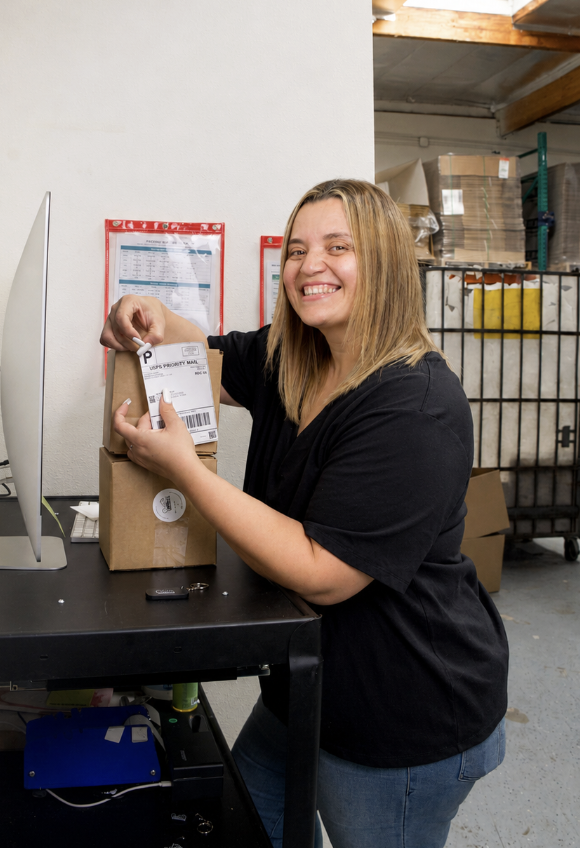
I will never forget seeing more than 200 packages returned to my front door.
Each one had a big red notice telling me the same thing:
Dimensions wrong. Label voided. Repurchase required.
These were orders my customers had already paid for and were waiting to receive. Instead of moving toward them, every package had come right back to me.
I cried. I panicked. For a moment, I honestly thought I had destroyed my business.
But that shipping disaster became one of the most valuable lessons of my live-selling career. It forced me to understand how shipping really works, build better systems, and stop treating fulfillment like something I could figure out after the show.
If shipping profiles, package dimensions, or printing hundreds of labels makes you nervous, amiga, this story is for you.
Live Selling Can Multiply a Small Shipping Mistake
Before live selling, I was used to platforms where I might sell a few items at a time. Live selling was completely different.
As my shows grew, so did my order volume. What started with a few sales eventually became hundreds—and later thousands—of orders that needed to be packaged and shipped quickly.
That growth was exciting, but it also exposed every weakness in my system.
When you sell one item with the wrong shipping information, you have one problem. When you sell 200 items using the same incorrect setup, you can create 200 problems in a single show.
That is exactly what happened to me.
Although my mistake happened while selling on Whatnot, this lesson applies wherever you sell live—Whatnot, TikTok Shop, Amazon, or another platform. The faster you sell, the more important your shipping system becomes.
The Show That Created My Shipping Nightmare
At the time, I was still selling from my garage. I had a mixture of inventory in different sizes, weights, and categories.
Instead of creating accurate shipping profiles for those different products, I used one general listing for my pallet pulls. During the show, I sold approximately 200 items through that listing.
Then I printed all the shipping labels in bulk.
I was so focused on getting everything packaged and out the door that I didn’t stop to confirm whether the package dimensions and weights on those labels matched the actual packages.
USPS picked up the orders, and I thought I was finished.
Three days later, they all came back.
More than 200 packages were sitting in front of me with notices saying the dimensions were incorrect and the labels had to be repurchased.
My customers were waiting. My money was tied up. I didn’t know how much fixing the labels would cost, and I had no idea how I would explain the delay.
That was the moment I realized shipping wasn’t simply the final step after a sale.
Shipping was part of the sale.
Why Package Dimensions and Weight Both Matter
One of the biggest shipping mistakes new resellers make is paying attention only to weight.
Weight matters, but dimensions matter too.
A large, lightweight box can take up more room in a carrier’s truck than a small, heavy package. That means a carrier may calculate the shipping cost using the package’s dimensions rather than its scale weight.
If the packed weight or exterior dimensions do not match the information on your label, the carrier may issue a shipping adjustment, return the package, or charge additional fees. Whatnot explains that a carrier adjustment may occur when the carrier finds a difference between the label information and the package it receives.
Here is the part I had to learn the hard way: you need to measure and weigh the finished package—not just the item.
That includes:
The box or poly mailer
Tissue paper and protective wrapping
Bubble wrap or other cushioning
Inserts and thank-you cards
Any additional packaging needed to ship the order safely
A shirt may weigh one amount by itself and something different after it is folded, wrapped, and placed in a mailer. A fragile item can change even more after you add a box and protective material.
Bulk Printing Wasn’t the Problem
After this happened, I could have blamed bulk printing. But bulk printing was not the real problem.
The problem was bulk printing labels I had not verified.
Bulk tools are helpful when you have a large number of orders. But they also multiply whatever information you give them. If the shipping information is correct, you can save hours. If it is wrong, you can create hundreds of incorrect labels in minutes.
Now, I never assume that everything is ready just because a button says “Print All.”
Before generating a large batch of labels, I stop and inspect a few orders from every product and packaging group. I confirm the profile, packed weight, dimensions, and shipping service.
A five-minute check can prevent days of stress.
The Shipping System I Built After This Mistake
My shipping process became much more organized after those packages were returned.
1. Sort inventory by how it will ship
I organize similar products together before the show.
For example, denim may go in one group, lightweight shirts in another, and bulky sweaters in another. Fragile or oversized products need their own process.
This makes it easier to create accurate listings and avoid using one shipping setup for products that are completely different.
2. Pack and measure a sample
Before the show, I package one representative item from each group exactly as I plan to ship it.
Then I weigh the finished package and measure its exterior length, width, and height.
I don’t guess. I don’t use only the item weight. I measure the package the carrier will actually receive.
3. Create custom shipping profiles
On Whatnot, shipping profiles store information such as an item’s weight, dimensions, and shipping method. Accurate profiles also help the platform’s bundling system calculate how several purchases can be shipped together.
Whatnot recommends reviewing shipping settings before selling and updating them whenever products, packaging, or shipping preferences change. You can learn more in its guides to setting up shipping and choosing shipping profiles.
Creating these profiles takes a little time in the beginning, but it can save you from correcting order after order later.
4. Think about bundled purchases
Live-selling customers often buy more than one item during a show.
You need to consider what happens when several items are bundled into one shipment. Will they still fit safely in the same mailer or box? Will the combined package become oversized? Could a heavy item damage a fragile one?
Whatnot’s Smart Bundling system uses shipping-profile information when grouping eligible orders, so accurate profiles matter before the first item sells.
5. Spot-check orders before printing everything
Before printing a large label batch, check several different orders.
Confirm:
The correct product profile was used
The packed weight is accurate
The exterior dimensions are correct
The packaging matches the shipping service
Bundled orders will fit safely
No unusual or oversized order needs individual attention
Then—and only then—print in bulk.
Choosing the Right Packaging
Not every product should be shipped the same way.
Poly mailers can work well for durable, lightweight products such as clothing. Bubble mailers may be appropriate for small items that need a little more protection. Boxes and cushioning are usually safer for fragile, structured, or easily damaged products.
The cheapest packaging is not always the most profitable choice. If an item arrives damaged, you may lose the product, the sale, and the customer’s trust.
You also need to match USPS-branded packaging with the correct postage. Priority Mail and Flat Rate materials are designed for their corresponding services. Do not use free Priority Mail packaging as a general-purpose box with a different USPS service.
This is especially important because Whatnot’s available shipping services, pricing, and packaging rules can change. Check your current Seller Hub options before every major show instead of relying on an old tutorial or rate chart. Whatnot publishes current updates in its US shipping guidance.
Be Careful With Free and Discounted Shipping
Shipping discounts can help attract buyers, but they are not automatically a good deal for your business
I once accidentally offered free shipping during a shoe show. By the time my team caught the mistake, we had already made approximately 70 sales.
The show looked successful—but I had agreed to cover shipping on all those orders.
Before offering free or discounted shipping, calculate what is left after every cost:
Sale price − inventory cost − platform fees − shipping you cover − packaging and labor = available margin
If the remaining margin still makes sense, a shipping promotion may support your strategy. If it doesn’t, more sales can actually create a bigger loss.
On Whatnot, buyers normally pay shipping unless the seller chooses to cover some or all of it. The seller’s portion is then deducted from the sale proceeds. Review the platform’s current free and discounted shipping options before running a promotion.
What to Do if Your Shipping Label Is Wrong
If you discover an incorrect weight or dimension before handing the package to the carrier, stop and correct it.
Do not hope the carrier overlooks it.
A safer response is to:
Open the order in your Seller Hub.
Confirm the reason the label is incorrect.
Weigh and measure the completed package again.
Update the shipment information.
Generate the corrected label.
Contact seller support if you cannot resolve the issue.
Communicate with the buyer if the correction will delay the order.
Whatnot provides instructions for how to change or fix a shipping label and adjust a shipment after a sale.
Do not assume the platform will cover every fee. Rules and allowances can change, and some adjustments may be charged to the seller.
Don’t Sell More Than You Can Fulfill
There is another lesson hiding inside my 200-package disaster: sales are only one part of a successful show.
You also need the capacity to fulfill those sales correctly and on time.
I know how exciting it is when the orders keep coming. But before chasing a bigger sales number, ask yourself:
Do I have enough packaging?
Do I have space to organize the orders?
Can I print and match the labels correctly?
Can I package everything safely?
Can I hand the orders to the carrier on time?
Do I need help before my next show?
Whatnot’s current policy expects sellers to ship within two business days, excluding weekends and holidays. For higher-volume operations, its in-app shipment scanner and manifest tools can help document carrier handoff—but those tools do not replace accurate labels or careful packaging.
Your sales volume should grow with your fulfillment capacity.
This is also one of the reasons I eventually had to hire my first employee. I could not continue growing the front end of the business while ignoring what needed to happen behind the scenes.
Shipping Is Part of Your Customer Experience
Your customer does not experience your business only while you are live.
They experience it when the package arrives.
They notice how quickly you ship, whether the correct item is inside, whether it was protected, and whether the packaging shows care.
That means your shipping station is part of your brand
You can have amazing energy on camera and make a lot of sales, but if orders are delayed, returned, damaged, or mixed up, customers may not come back.
People come for the product, stay for the person, and return because they trust the entire experience.
My Biggest Lesson From 200 Returned Packages
At the time, seeing all those packages returned felt like the end of my business.
It wasn’t.
I contacted support, corrected what needed to be corrected, communicated with my customers, and kept going. Some costs were resolved with help, while others became an expensive lesson I had to accept.
Most importantly, I built a better system.
Today, our team can fulfill an order volume I could not have imagined when I was packaging everything in my garage. But we didn’t reach that level because I never made mistakes.
We reached it because I learned from them.
If you are confused about shipping right now, please don’t let that stop you from starting. Learn the basics, create your profiles, check your work, and improve the system every time you sell.
Your first shipping mistake does not have to define your business. It can become the lesson that helps you build a stronger one.
And amiga, if I could recover from 200 returned packages, you can recover from your mistake too.
🎧 Want to hear the complete story? Listen to the full Moms & Crumbs podcast episode or watch it on YouTube to hear exactly what happened when those packages returned—and how I handled the nightmare without giving up.
Shipping services, rates, platform features, and carrier policies can change. Always confirm current information with your selling platform and shipping carrier before your show.
About Cindy Calderon
Cindy Calderon is a multi-seven-figure reseller, one of TikTok’s top live sellers, and the founder of Moms & Crumbs. She helps aspiring sellers source smarter, sell confidently, and build real income through live selling.